Introducing the Operating Room Team Member Roles
In this section, you will cover the separate roles of the perioperative nurses and other team members. One way to differentiate the OR team members is to identify if they are part of the sterile surgical team who provides direct surgical care to the patient, or if they are part of the non-sterile team who provides direct patient care external to the sterile field.
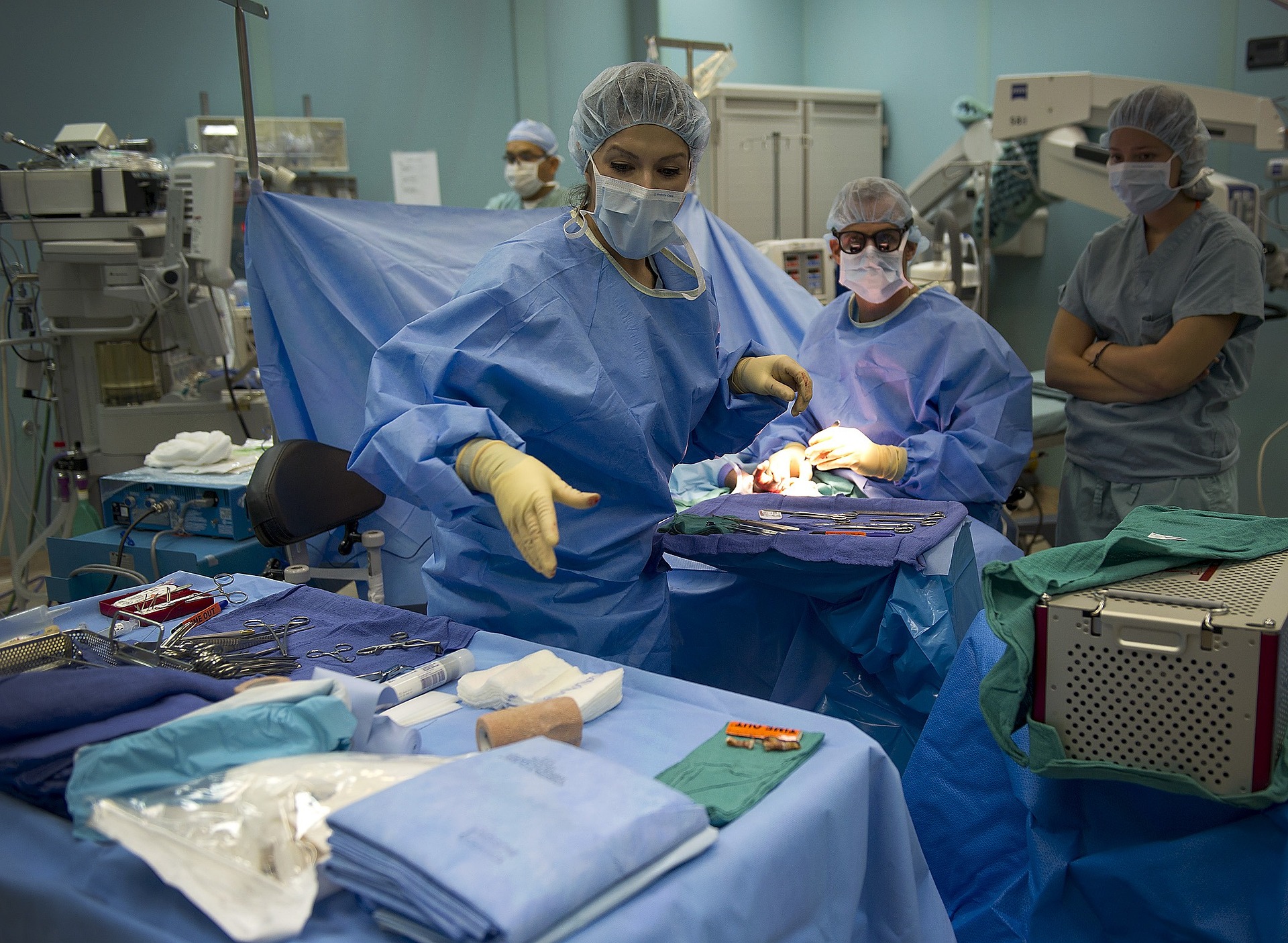
Non-sterile team members:
- provide patient care
- coordinate activities and react to untoward intraoperative situations
- function outside and around the sterile field
- use non-sterile equipment and handle non-sterile supplies
- supply the sterile team with necessary items
Sterile team members:
- perform surgical hand and arm hygiene
- wear proper surgical attire plus sterile gowns and gloves
- prepare the patient by draping the incision and immediate surrounding
- make contact only with sterile items throughout surgical procedures
Who is on the Team?
Perioperative Registered Nurses (RN) have advanced OR education, are trained in all surgical specialties and assume either the scrub or circulating nurse role.
Circulating Nurse
Circulating nurses or circulators are part of the nonsterile team and have direct patient responsibilities. They work with the Anesthesia Care Team (ACT), OR personnel, and interdepartmentally to achieve seamless outcomes.
Scrub Nurse
Registered Practical Nurses (RPN) / Licensed Nurses (LPN) assume the scrub role and are part of the sterile surgical team. That team includes the surgeon and surgical assistants who may be residents, physician assistants, and/or registered nurse first assistants (RNFAs).
Key Competencies of Perioperative Nurses
- They practice professionally.
- They provide physical patient care.
- They provide supportive care.
- They promote a safe environment.
- They respond to urgent/emergency situations.
- They manage resources.
Take time to review all the elements of the perioperative nursing key competencies in the ORNAC Standards pp. 62-67.
Anesthesia Providers
Anesthesiologists are physicians with four or more years of specialty training in anesthesiology and are the leaders in the Anesthesia Care Team (ACT). The ACT team cares for the patient in all phases of perianesthesia care.
Perianesthesia care may be provided by Nurse-Practitioners – Anesthesia (NP-A) who complete a Master/Nurse Practitioner degree with further didactic and clinical training in anesthesia. The NP-A may work independently or under the direction of an anesthesiologist.
Members of ACT who provide anesthesia care under the direct supervision of the Anesthesiologist and in adherence to medical directives have an advanced graduate certificate in anesthesia and include:
- Registered Nurse Anesthesia Assistants (RNAA)
- Respiratory Therapists
Key competencies of anesthesia providers:
- They focus on and monitor sensory and cerebral functions in anesthetized patients.
- They have a vast knowledge of pharmacology, airway, and circulatory management.
- They have specialized training to care for specific patients such as obstetrical, cardiovascular, neurological, and pediatric.
- They are pain management control experts.
They provide appropriate anesthesia:
- Conscious sedation – monitored administration of different drugs to produce anxiolytic, amnestic, hypnotic, and analgesic effects.
- General anesthesia – a combination of intravenous drugs and inhaled gases that render patients unconscious, paralyzed, and non-sensory.
- Local injection/application of anesthetic drugs to body parts causes extreme numbing and pain control.
- Regional anesthesia blocks nerve and pain sensations in different body parts, e.g., spinal and epidural blocks.
Surgeon/Surgical Residents
Surgeons are physicians who graduate from medical school and then do a General Surgery residency of five years. To specialize in areas such as pediatrics, transplant surgery, cardiovascular surgery, neurosurgery, etc., adds years of residency requirements. In teaching hospitals, residents directly assist the surgeon.
The surgical profession requires:
- diagnosing the preoperative patient
- performing the operation and making important intraoperative decisions about the patient’s health, safety, and outcome
- planning postoperative surgical care and rehabilitation
- assuming leadership of the intraoperative surgical team
Surgical Assistants
Teaching hospitals have surgical residents and interns who assist in the operating room. In community hospitals, surgical assistants can be either specially licensed family practitioners or surgical assistants.
Registered Nurse First Assistants (RNFA): The Canadian Nurses Association and provincial nursing licensing organizations recognize the RNFA role as an expanded perioperative nursing position achieved through advanced education and training.
The scope of practice of the RNFA encompasses the preoperative, intraoperative, and postoperative phases of the surgical experience. (See Registered Nurse First Assistant Standard (ORNAC p. 93-106).
Ancillary Personnel: Patient Care Assistants (PCAs) and Environmental Staff
PCA team members work across operating rooms to provide patient and equipment assistance needed, primarily at the start and finish of the surgical procedure.
Their duties include:
- transport
- help with positioning
- equipment set up
Environmental staff clean and disinfect operating rooms during turnovers and at the end of the day.
Other Essential Personnel
Other essential personnel include OR administrators, managers, and team leaders who liaise with other departments to coordinate the process for all surgical suites.
Examples of some essential allied departments:
- Biomedical: service complex surgical equipment
- Medical Device Reprocessing Department: decontaminates, assembles, sterilizes surgical sets/equipment, and organizes all case supplies
- Pharmacy
- Diagnostic imaging
- Blood services
- Pathology and microbiology