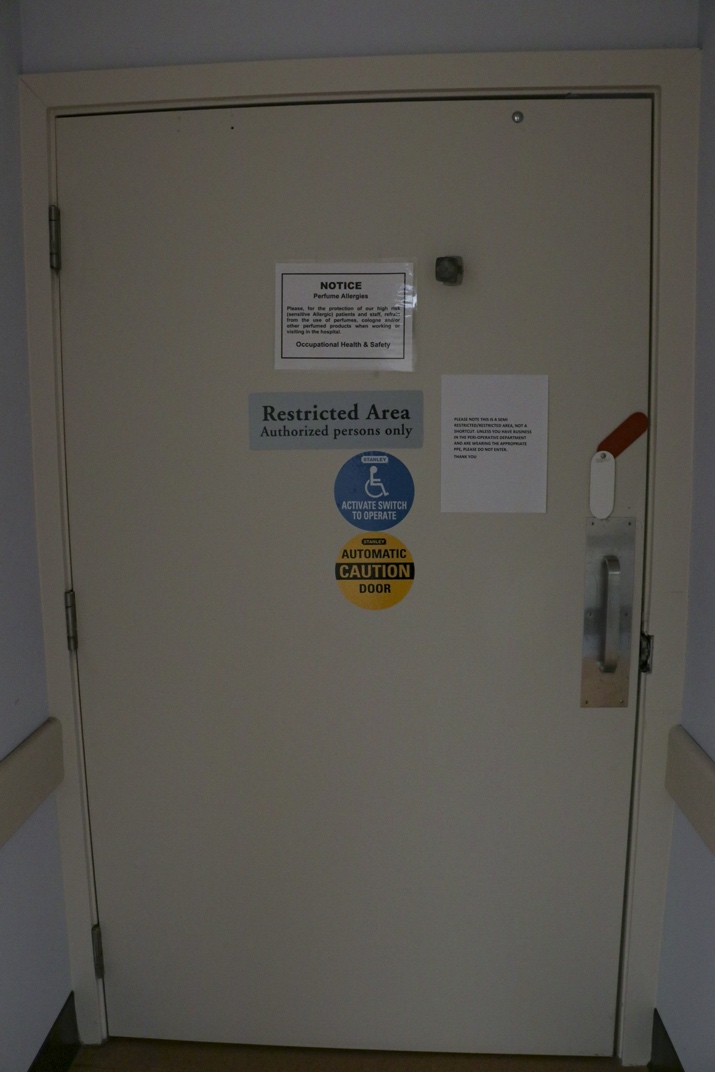
The Physical Perioperative Environment
Before we delve into safety considerations, it is vital for you to understand the physical environment that makes up the perioperative setting.
This can look different in various OR settings. For example, the physical environment in an endoscopy suite, day surgical centre, or surgical clinic will look quite different from an acute care hospital setting operating room environment. You will be able to identify key concepts that are applied in any perioperative setting.
The perioperative environment is divided into three areas (select the + hotspots in the image to reveal information):
- unrestricted areas
- semi-restricted areas
- restricted areas
Unrestricted areas
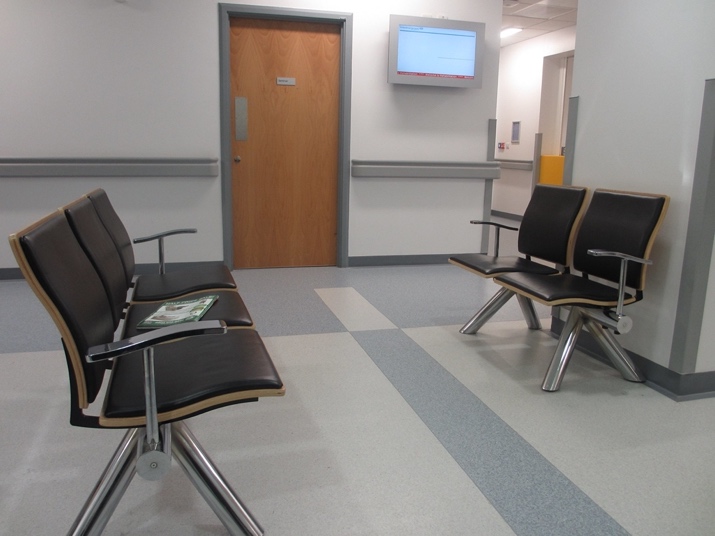
These are areas outside of the OR surgical suites/theatres that are used as a communication hub for other healthcare personnel or family members to provide information and communicate to the rest of the perioperative team. This could include the OR front desk or admission area, pre-surgical waiting areas, and changerooms.
- There should be some sort of control point so that access can be monitored.
- No specialized attire is required in these areas.
Semi-Restricted areas
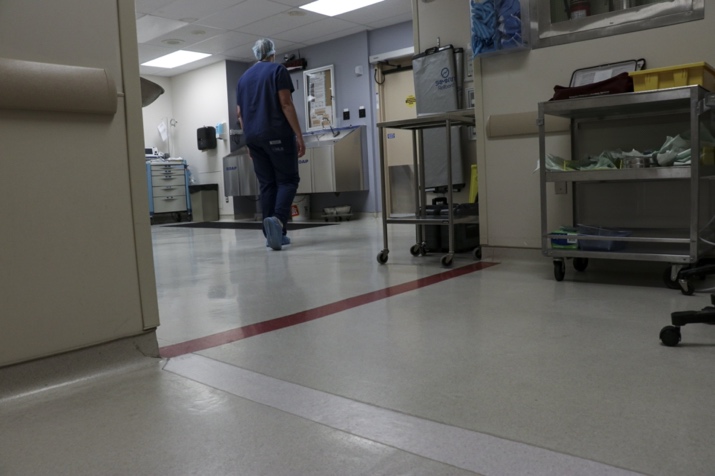
These are peripheral support areas within the surgical suite. This can include work areas (including where instruments are cleaned and reprocessed), storage areas, and hallways that lead to the OR surgical suites/theatres. This can also include the scrub sink area.
- Any personnel entering this area must wear surgical attire and cover facial hair and head.
- Patients need to be in a clean hospital gown when entering this area and should have their hair covered.
In some facilities, a physical barrier such as a door separates restricted from unrestricted areas. In others, there may be a visual indicator of the change such as the red line in the image seen here.
Restricted areas
Restricted areas include the OR itself, any procedure rooms, and the central core.
- Any personnel entering this area must be wearing surgical attire and cover facial hair and head.
- Masks must be worn when any sterile items have been opened or scrubbed if personnel are present.
- Patients need to be in a clean hospital gown and should have their hair covered. Patients must wear a mask in the restricted zone only if required for droplet precautions
Traffic Patterns and Control
You will learn more about the importance of traffic patterns in preventing infection in a later module. However, as you learn about different areas of the perioperative environment, it is important to recognize that traffic patterns play a role in the spread of infection. Doors, barriers, visual cues such as bright lines on the floor, and signage are used throughout the perioperative environment to indicate restricted, semi-restricted and unrestricted environments. It is important to pay close attention to signage and always keep doors to restricted areas closed except when necessary for the movement of personnel or equipment.
(King & Spry, 2019; ORNAC, 2021 – 2.6)