Radiation Exposure
As the perioperative environment continues to evolve, interventional technology such as radiology is increasingly incorporated into surgical procedures. This technological advancement allows for intraoperative assessment and visualization which is beneficial for patients; however, it increases exposure for all perioperative personnel to ionizing radiation. You will learn more about surgical equipment and the technology of radiation in course three, but it is important to recognize that perioperative personnel can be exposed to scatter radiation. Exposure effects can range from dermatitis to radiation poisoning.
(Smith, 2019)
Decreasing Exposure to Radiation
Radiation exposure to staff can be reduced by optimizing procedures with As Low a Dose as Reasonably Achievable (ALARA). These principles include:
- Reducing the TIME that radiation is actively used.
- Increasing the DISTANCE by standing as far away as possible from the source of radiation.
- SHIELDING from Gamma rays by wearing lead aprons.
Surgical Smoke Safety
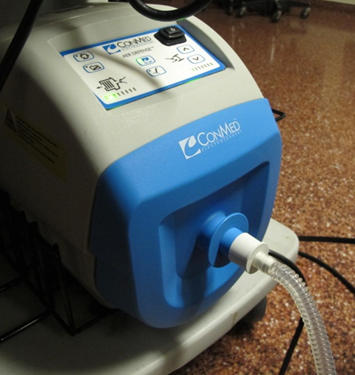
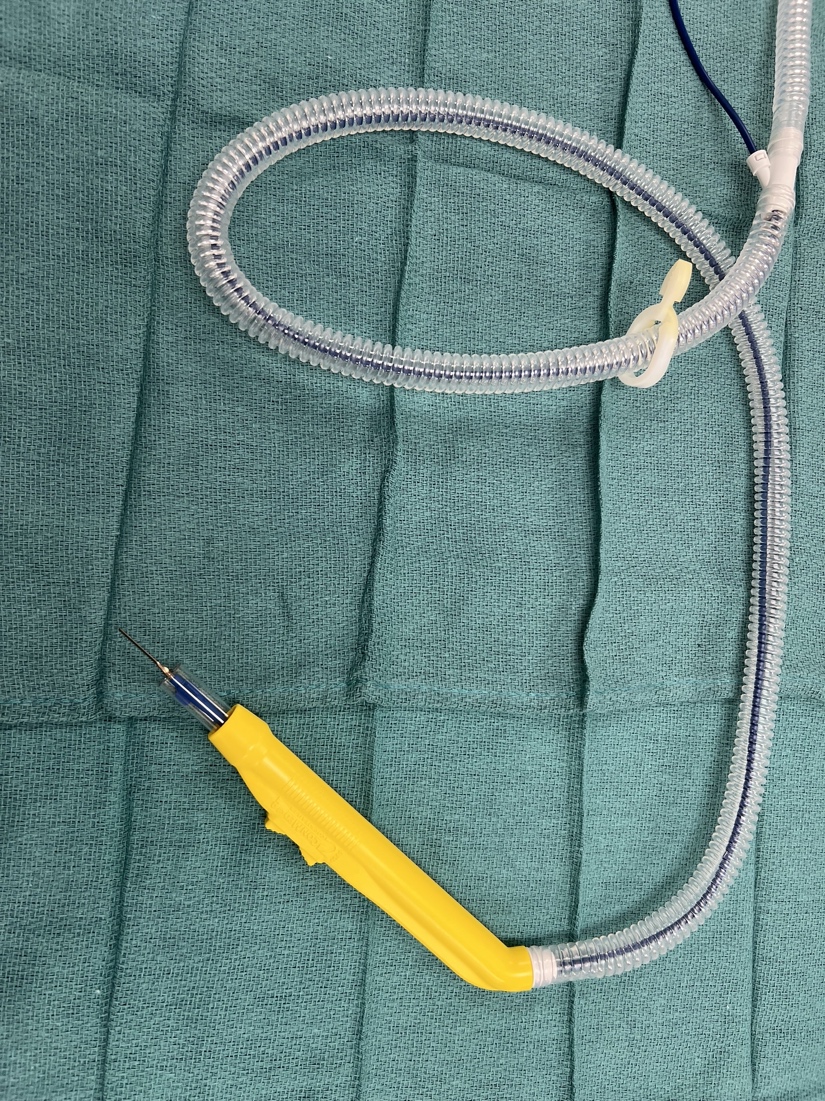
You will learn more about surgical smoke later in the program, but it is important to recognize the occupational hazard of surgical smoke from Electrosurgical (ESU) devices (also known as cautery machines).
- When perioperative personnel are exposed to 1g of tissue from an ESU device, it is equivalent to smoking six unfiltered cigarettes in 15 minutes.
- That increases to 27-30 unfiltered cigarettes if they are in the OR for one day and exposed to ESU smoke.
- Malignant and infectious cells which can be found in an ESU plume are small enough to inhale.
(Smith, 2019)
Decreasing Exposure to Surgical Smoke
For safety reasons, smoke evacuators should ALWAYS be used when there is exposure to electro-cautery devices in the OR, including during minimally invasive procedures. Organizations such as the Association of perioperative Registered Nurses (AORN) in the USA have campaigns aimed at eliminating surgical smoke.
Perioperative nurses must advocate for smoke-free environments.