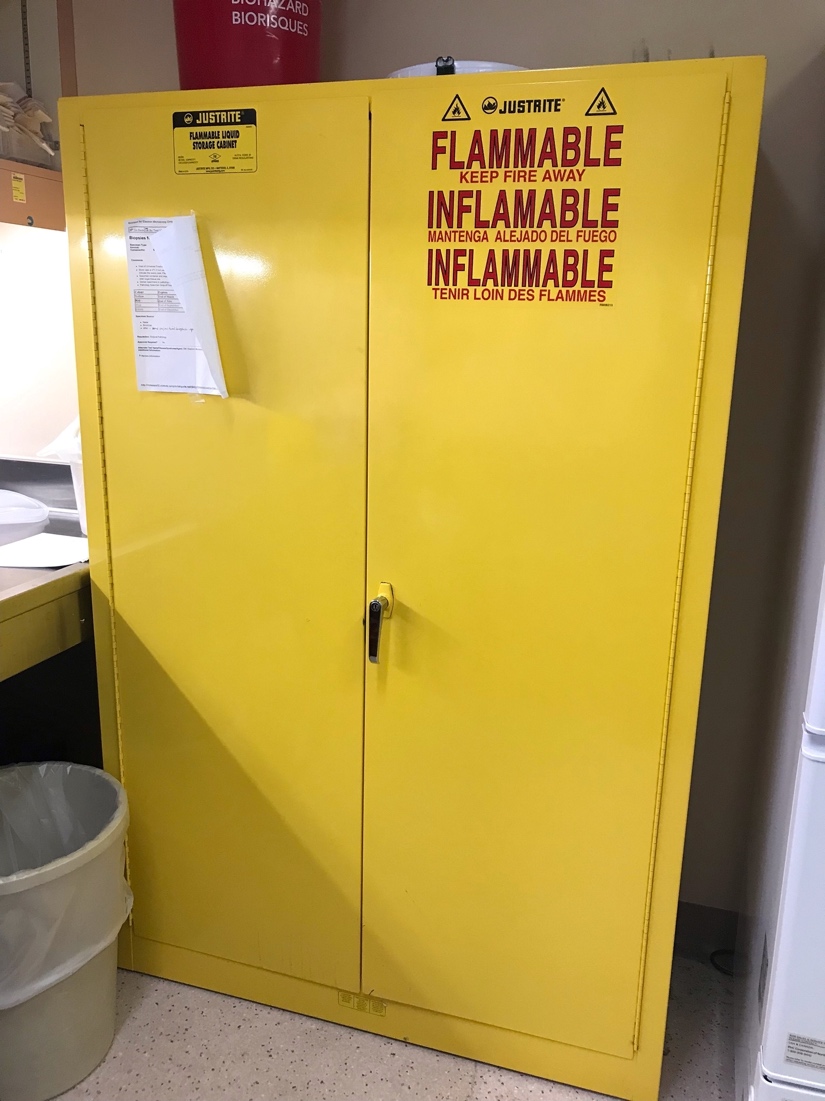
Exposure to Chemicals
Chemicals in the Perioperative Environment
There are many chemicals used in the perioperative environment. Various chemicals are required for sterilization and disinfection, cleaning, patient care, and specimen preservation. All perioperative team members who work with chemicals must be trained in and understand the safety measures when working with hazardous materials.
Institutions are required to follow and comply with Workplace Hazardous Materials Information System (WHMIS) regulations and follow safety policies and procedures. All personnel must receive regular training in WHMIS regulations and follow the protocols to ensure a safe environment of care.
Examples of chemicals used in the OR environment:
(ORNAC, 2021)
Routes of Exposure
Inhalation
Toxic chemicals, pathogens or radioisotopes can enter the body through the respiratory tract. This is common with chemicals that are gases or vapours but can also take the form of aerosols or dust particles. These agents are quickly absorbed because of how vascular the lungs are and the large surface area that they cover. Symptoms can be present in 1-3 days after being exposed.
Skin contact or absorption through mucous membranes
This route of exposure can occur through the mouth, eyes, nose, and non-intact or intact skin.
Ingestion
This is the least common route of exposure in the workplace but can occur if unintentional exposure to the hand or mouth occurs. For example, biting fingernails that are contaminated or swallowing saliva that contains airborne debris.
(Smith, 2019)
Decreasing exposure to Chemicals
As all perioperative personnel learn in their WHMIS training, it is always important to decrease and reduce risk. This can be done by:
- Eliminating hazardous products/exposure when possible.
- Substituting with a less hazardous product.
- Or if steps one and two are not possible, using engineering and administrative controls to make sure that hazardous products are being used, stored, and handled in a safe manner.
Employers are responsible for training all staff members about chemical hazards and using the proper control measures. For example, Material Safety Data Sheets (MSDS) must be available to provide all required standardized information.
It is important for perioperative personnel to monitor their skin when using latex equipment or gloves. They can develop a latex allergy from repeated exposure which can present as skin disease, asthma, or even anaphylaxis. Institutions should employ strategies such as only using powder-free gloves that have low levels of chemical allergens.