Surgical Attire
General Considerations
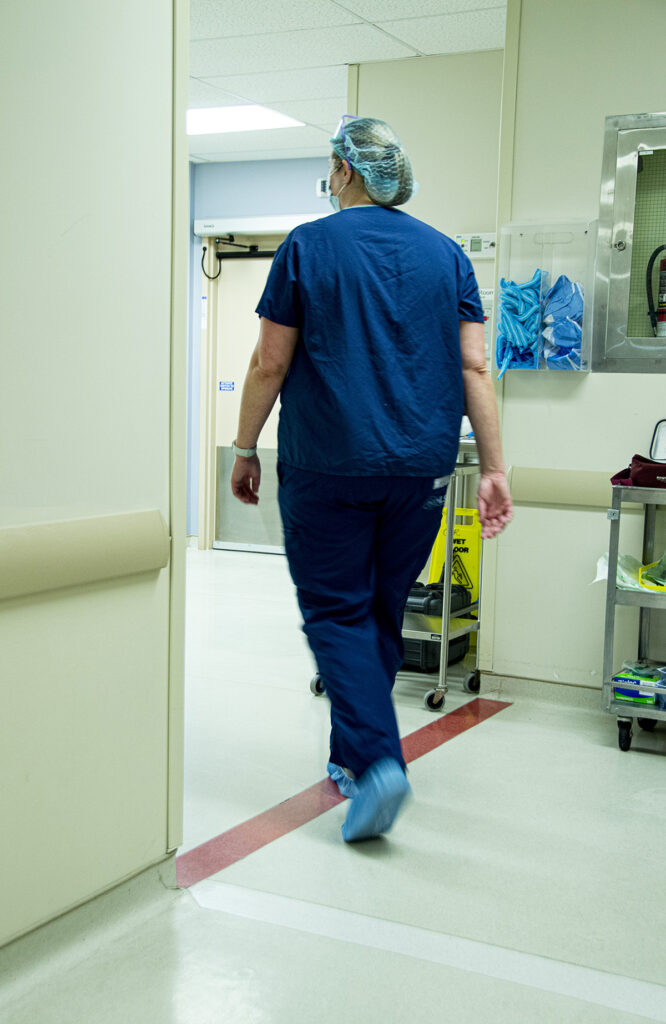
All institutions must have a policy regarding proper OR attire for perioperative personnel. Key considerations per ORNAC standards include:
- All OR attire must be laundered by the health care organization or an approved contractor.
- Scrub tops must be tucked into pants or fit closely to the body.
- Warm-up jackets must be hospital supplied and fastened. Personal items including clothing not covered by hospital-supplied scrubs, backpacks, bags, and sweaters should not be brought into the OR.
- OR attire may not be worn outside of the facility.
- OR attire must be changed at least daily or whenever soiled.
- Cloth hats must be laundered by the health care organization. Any hats that are not must be covered with a disposable hat.
- Shoes must meet occupational health and safety regulations and should not be removed from the OR. Shoe coverings should be used when contamination is anticipated and removed when soiled or leaving the OR.
(ORNAC, 2021 – 2.7)

Nails and Jewelry
- Nails must be kept short as long fingernails can puncture sterile gloves.
- Nails must be natural. Artificial nails can harbour microorganisms, making donning PPE, and hand hygiene difficult.
- Nail polish should not be worn because chipped or peeling polish can harbour microorganisms. Note that some institutions have differing policies.
- All jewelry must be removed before entering the semi-restricted or restricted environment. This includes any jewelry that cannot be covered by OR attire such as watches, bracelets, rings, and earrings.
(ORNAC, 2021 – 2.7)
Protective Eyewear
There are several types of protective eyewear that can be worn in the operating room. Please remember prescription glasses are not considered protective.
Protective eyewear should be worn whenever there is a potential for splashing or spraying of any fluids. This includes bodily fluids as well as medications. Protective eyewear examples are:




(ORNAC, 2021 – 2.10)
🧩 Practice Activity: Quick Quiz
Choose one or multiple responses to answer the question. Select “Check” when you feel confident in your answer.
Masks
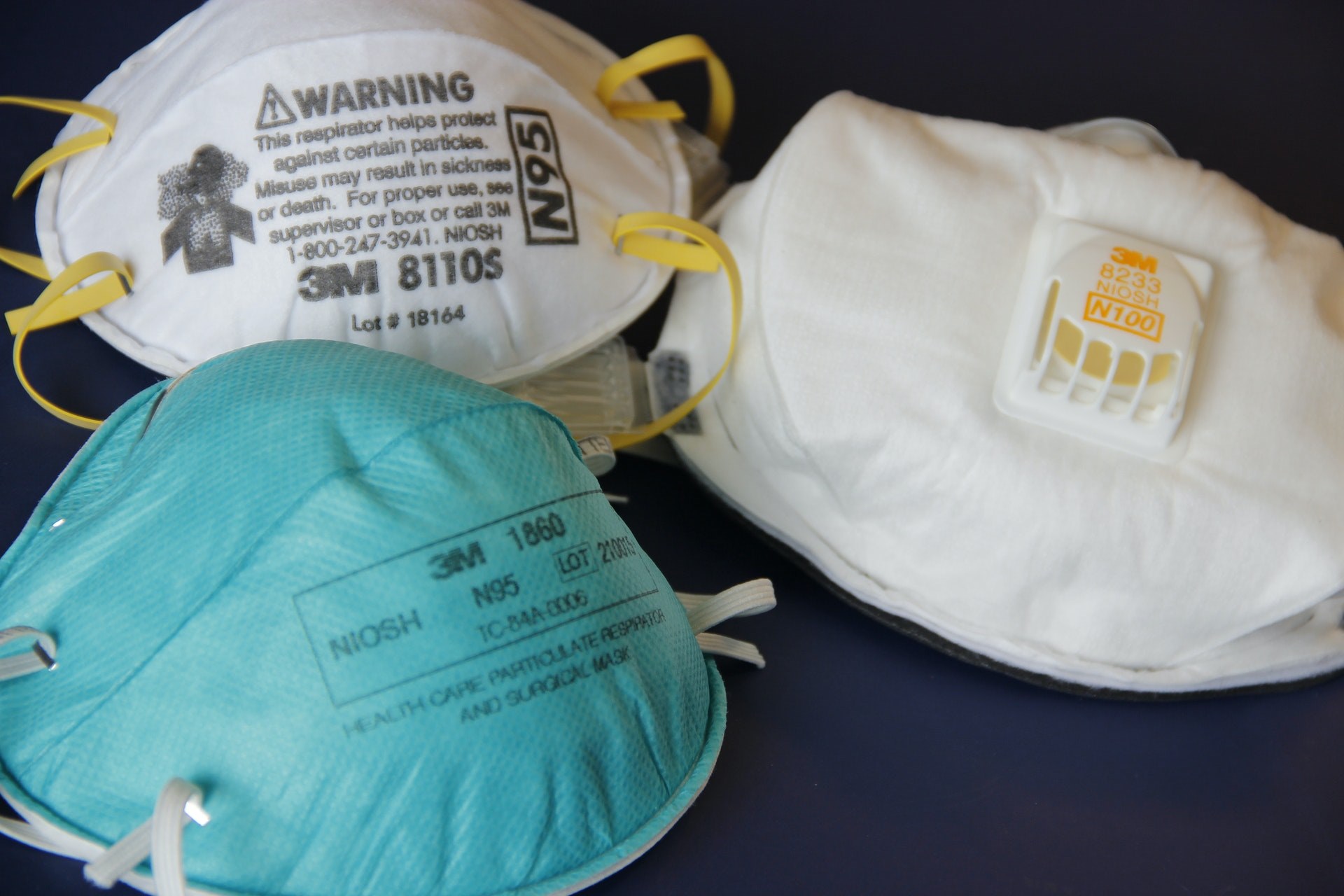
There are several types of masks that can be worn in the operating room. Surgical masks are worn for two reasons:
- To support an aseptic environment by preventing microbial spread from perioperative personnel into the OR room.
- To protect the perioperative staff from becoming contaminated by spray or aerosolization of fluids.
(ORNAC, 2021 – 2.11)