Light Source and Fiberoptic Cables
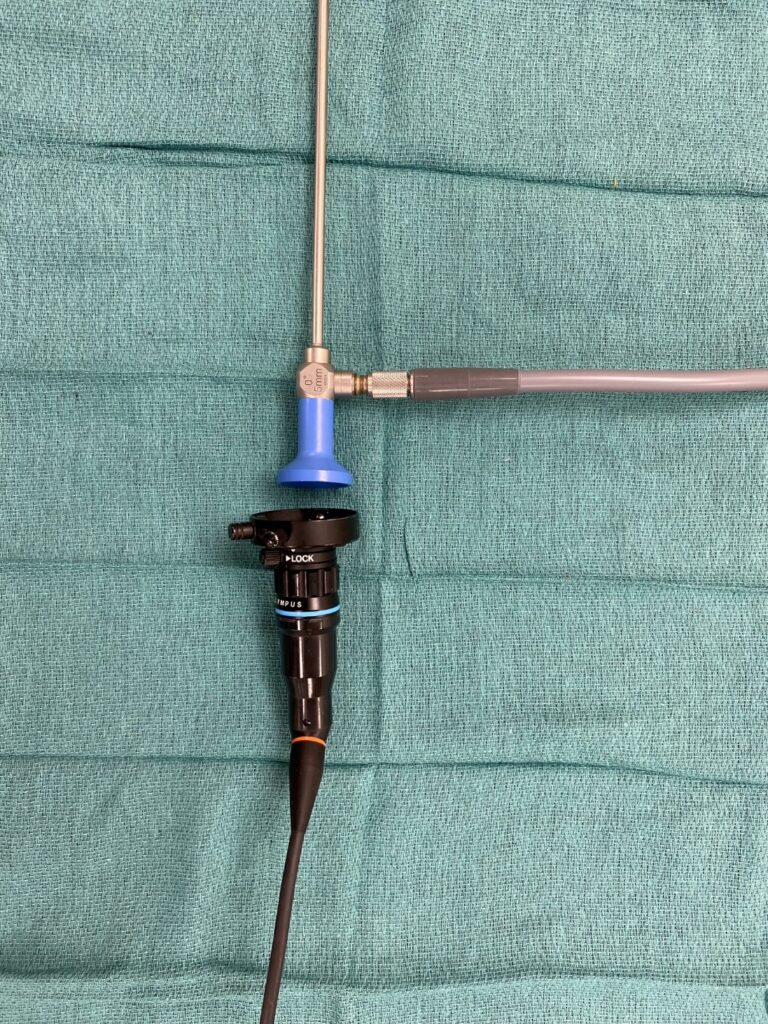
A visualization within a closed cavity is not possible unless there is a source of light. An endoscopic light source is designed to have what is called cold light. This means that the heat produced from the light is not transferred into the scope itself. Cold light is essential for endoscopic procedures to prevent damage to surrounding tissue. The ends of the light cords themselves can become extremely hot and are considered a fire risk in the OR. Perioperative personnel must be cautious when the light cord is disconnected from the endoscope, ensuring that it does not meet any flammable materials.
A good practice for the perioperative team is to NEVER turn on the light source until it is connected to the endoscope. If the cord needs to be disconnected (i.e., to change scopes), the light source should be placed on standby.
Lap Burn
View a case study about a laparoscopic burn case. A woman was scheduled for an elective diagnostic laparoscopy for dysfunctional uterine bleeding…
Read Article
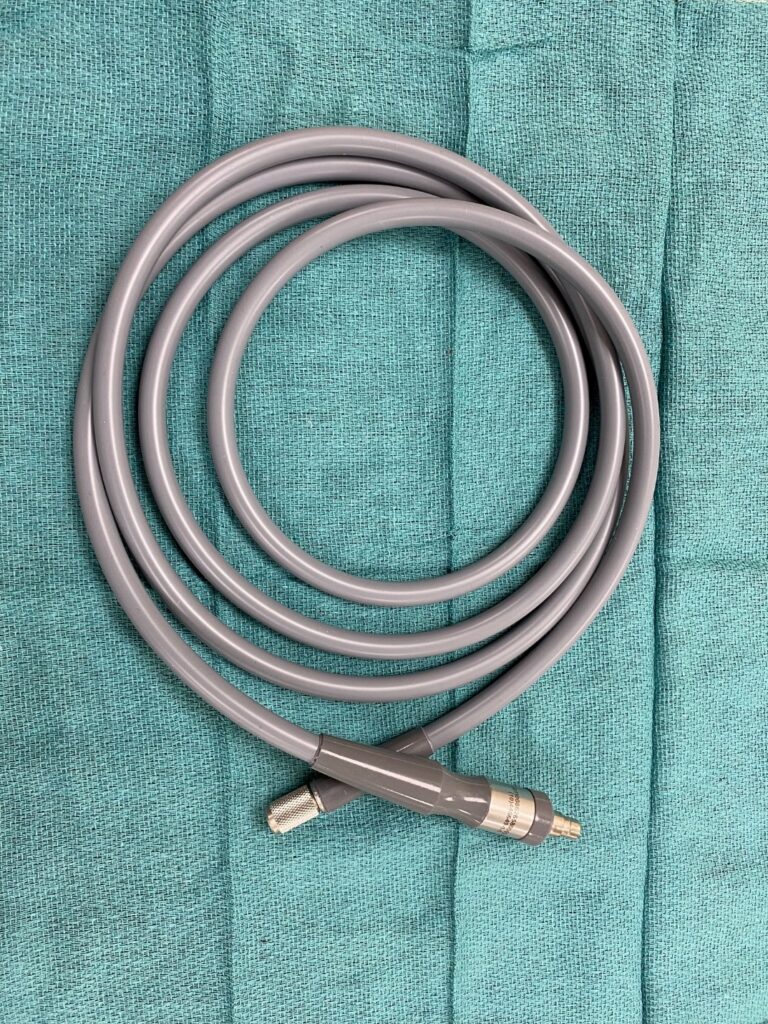
Fiberoptic cables are made of hundreds of glass fibres that transmit light. Perioperative team members must be cautious not to break the fibres when handling these cables. The light cord connects directly to the endoscope.
Specific handling considerations:
- Avoid kinking or dropping
- Loosely coil
- Replace when 20% of fibres are broken
(Ball, 2019)
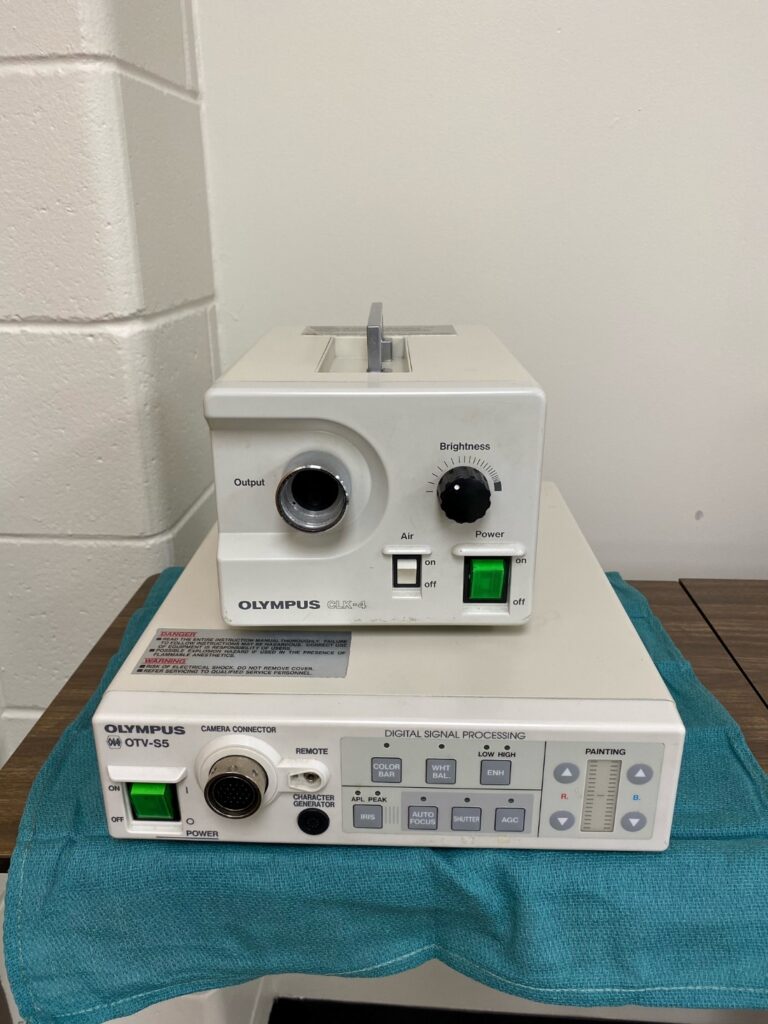
Diverse Types of Light Sources
Each type of light source has its advantages and disadvantages:
- Xenon: More expensive but long-lasting, better for smaller-diameter scopes, preferred light for video or picture taking
- Metal halide: shorter life span, less expensive, easier to replace, does not require large fans for cooling
- Halogen: Does not offer light intensity for endoscopic and video applications
White balancing is a procedure that should be performed at the start of each case or when a new fibre optic cable is used. Performing a white balance adjusts the camera to the end coupler, light cable, and endoscope. It must be performed for every procedure so that the camera can reference white to identify all other primary colours correctly.
The scrub nurse can perform a white balance by holding the end of an endoscope up to a white object such as a sponge. The light source must be turned on. Depending on the unit, the scrub nurse (if there is a button on the end of the camera on the sterile field) or the circulating nurse (using a button on the light source box) can activate the white balance button so that the camera can adjust appropriately.
(Ball, 2019)
🧠 Graded Activity
In Blackboard, complete the Graded Activity: Touch Surgery App